
A Comprehensive Analysis of Board Classification and Environmental Protection Grades
author: Eric
2025-08-18
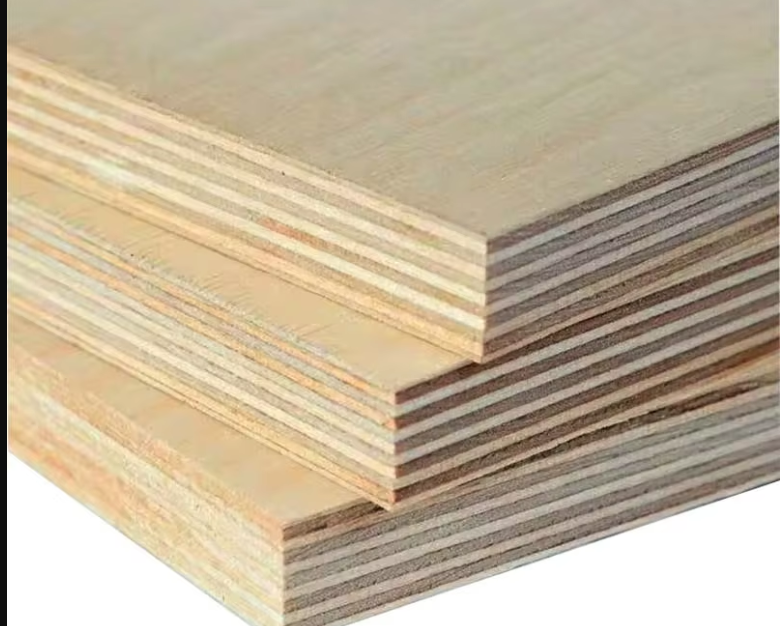
Plywood (multi-layer board): It is made by gluing multiple layers of veneer together. Usually, an odd number of veneer layers are used, and the fiber directions of adjacent veneer layers are arranged perpendicularly. We usually call it multi-layer board or solid wood multi-layer board.
Advantages: High strength, good stability, not easy to deform, convenient for construction, and moderate price.
Disadvantage: The environmental friendliness depends on the quality of the adhesive. If inferior adhesives are used, a large amount of formaldehyde will be released.
Applicable scenarios: It is usually used to make cabinet bodies and short cabinet doors for furniture. Note that multi-layer boards are not suitable for making long cabinet doors as there is a risk of deformation.
Advantages: High strength, good stability, not easy to deform, convenient for construction, and moderate price.
Disadvantage: The environmental friendliness depends on the quality of the adhesive. If inferior adhesives are used, a large amount of formaldehyde will be released.
Applicable scenarios: It is usually used to make cabinet bodies and short cabinet doors for furniture. Note that multi-layer boards are not suitable for making long cabinet doors as there is a risk of deformation.
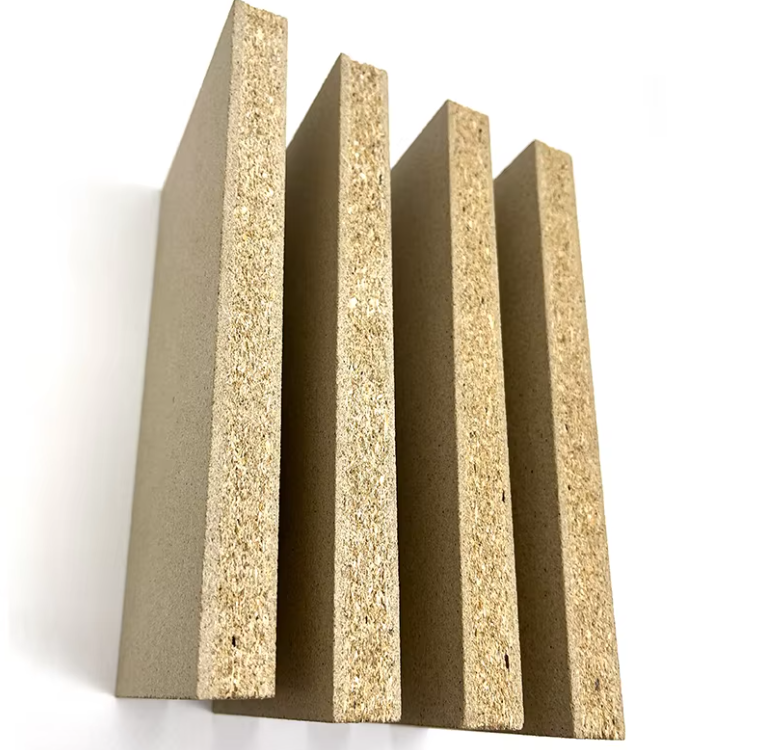
Particleboard (flakeboard): It is made by processing wood into fragments of certain specifications, and then through drying, gluing, hot pressing and other processes.
Advantages: low price, uniform material, good sound insulation and heat preservation performance.
Disadvantages: Low strength, slightly poor moisture resistance, weak nail-holding capacity, and not suitable for repeated disassembly.
Applicable scenarios: It is suitable for making furniture with low requirements for strength and moisture resistance, such as wardrobes, and is suitable for making cabinet doors.
Advantages: low price, uniform material, good sound insulation and heat preservation performance.
Disadvantages: Low strength, slightly poor moisture resistance, weak nail-holding capacity, and not suitable for repeated disassembly.
Applicable scenarios: It is suitable for making furniture with low requirements for strength and moisture resistance, such as wardrobes, and is suitable for making cabinet doors.
Mdf (density board): Made from wood fibers or other plant fibers, with the addition of adhesive. According to its density, it can be classified as high-density particle board, medium-density particle board and low-density particle board.
Advantages: The surface is smooth and flat, the material is fine and dense, the stability is good, and it is easy to shape and paint.
Disadvantages: Poor moisture resistance, prone to expansion and deformation after absorbing water, and poor nail-holding strength.
Applicable scenarios: Medium and high-density fiberboards can be used to make cabinet doors and decorative lines for furniture; Low-density fiberboards can be used for packaging and sound insulation, etc.
Advantages: The surface is smooth and flat, the material is fine and dense, the stability is good, and it is easy to shape and paint.
Disadvantages: Poor moisture resistance, prone to expansion and deformation after absorbing water, and poor nail-holding strength.
Applicable scenarios: Medium and high-density fiberboards can be used to make cabinet doors and decorative lines for furniture; Low-density fiberboards can be used for packaging and sound insulation, etc.
Environmental protection grade of board materials
Manufacturing Process, Applications, and Future Prospects of Blockboard
