
Production and Utilization of Construction Plywood
author: Suger
2025-09-17
Production and Utilization of Construction Plywood
Introduction
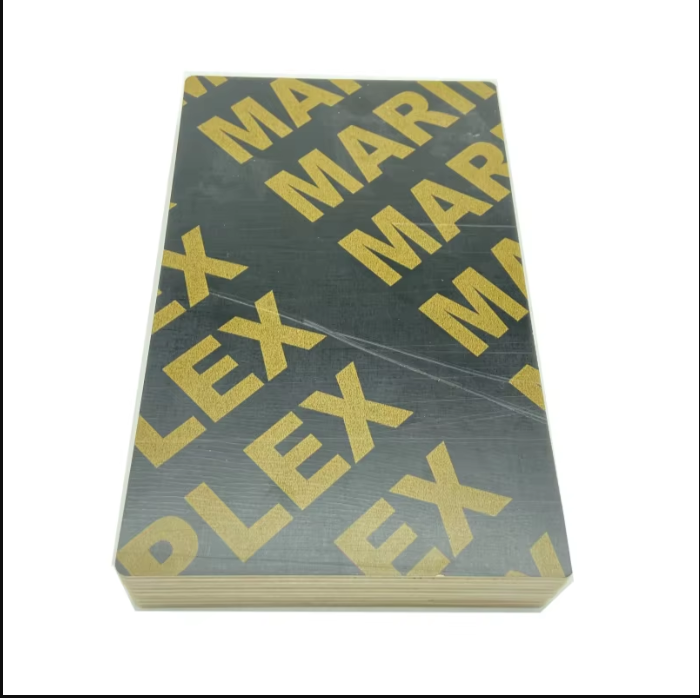
Construction plywood, specifically film-faced plywood, is an engineered wood panel widely used as a primary sheathing material in concrete formwork systems. It provides a smooth surface finish, structural strength, and reusability, making it indispensable in modern construction.
Introduction
Construction plywood, specifically film-faced plywood, is an engineered wood panel widely used as a primary sheathing material in concrete formwork systems. It provides a smooth surface finish, structural strength, and reusability, making it indispensable in modern construction.
I. Production of Construction Plywood
1. Raw Material Selection
•
Wood Species: Hardwoods such as Poplar, Eucalyptus, Birch, or Pine are commonly used due to their density, strength, and uniformity.
•
Synthetic Resins: Phenolic resin or melamine-urea formaldehyde is used as an adhesive for its waterproof and durable properties.
•
Surface Film: A specially engineered phenolic or melamine film is applied to the surface to enhance durability and release properties.
2. Manufacturing Process
The production involves precision engineering and strict quality control:
1. Raw Material Selection
•
Wood Species: Hardwoods such as Poplar, Eucalyptus, Birch, or Pine are commonly used due to their density, strength, and uniformity.
•
Synthetic Resins: Phenolic resin or melamine-urea formaldehyde is used as an adhesive for its waterproof and durable properties.
•
Surface Film: A specially engineered phenolic or melamine film is applied to the surface to enhance durability and release properties.
2. Manufacturing Process
The production involves precision engineering and strict quality control:
•
Peeling: Logs are rotary-cut into thin veneers of uniform thickness.
•
Drying: Veneers are dried in industrial kilns to reduce moisture content and prevent fungal decay.
•
Layering & Gluing: Veneers are layered with their grains perpendicular to each other (cross-lamination) and bonded with synthetic resin under high pressure. This structure enhances dimensional stability and strength.
•
Hot Pressing: Layers are pressed under high temperature and pressure to cure the resin and form a solid panel.
•
Film Coating: A phenolic/melamine-impregnated paper is applied to one or both surfaces under heat and pressure, creating a smooth, resistant film layer.
•
Cutting & Edging: Panels are cut to standard sizes (e.g., 1220×2440 mm) and edges are sealed with waterproof paint or resin to enhance longevity.
3. Quality Standards
•
Compliance with international standards such as EN 636 (Europe) or BS 5268 (UK) for structural use.
•
Grading based on film quality, number of reuses, and resistance to moisture (e.g., WBP (Weather and Boil Proof)).
II. Usage in Construction
1. Primary Application: Concrete Formwork
•
Used as the sheathing material in formwork systems to hold wet concrete until it cures.
•
Provides a smooth surface finish to concrete, reducing the need for post-processing.
•
Compatible with various framing systems (steel, aluminum, or timber).
2. Key Advantages
•
Reusability: High-quality film-faced plywood can be reused 20–100 times depending on care and concrete aggressiveness.
•
Lightweight: Easier to handle and install compared to metal alternatives.
•
Cost-Effective: Balances initial cost with longevity, reducing overall formwork expenses.
•
Versatility: Can be cut and shaped for complex formwork designs.
3. Best Practices for Use
•
Storage: Kept flat and dry to prevent warping or delamination.
•
Installation: Supported by a robust frame to evenly distribute concrete pressure.
•
Maintenance: Cleaned after each use with water and a mild detergent; minor damages repaired with epoxy filler.
•
Release Agents: Applied before pouring concrete to ensure easy stripping and preserve the panel’s surface.
4. Other Construction Applications
•
Flooring and Roofing: As structural sheathing or subflooring.
•
Wall Sheathing: In lightweight steel or timber framing structures.
•
Scaffolding Boards: For temporary work platforms (though less common).
III. Trends and Innovations
•
Sustainability: Increased use of FSC-certified wood and formaldehyde-free resins.
•
Enhanced Longevity: Development of 7–9-layer cores and UV-resistant films for extended reuse.
•
Hybrid Panels: Integration of plastic or composite layers for improved performance in harsh environments.
•
Digitalization: QR codes or RFID tags embedded for tracking reuse cycles and project management via BIM.
Conclusion
Construction plywood is a vital material that combines engineered manufacturing with practical versatility. Its production emphasizes durability and performance, while its application significantly influences the efficiency, cost, and quality of concrete construction. Ongoing innovations continue to enhance its sustainability and functional lifespan, ensuring its continued relevance in the built environment.
Peeling: Logs are rotary-cut into thin veneers of uniform thickness.
•
Drying: Veneers are dried in industrial kilns to reduce moisture content and prevent fungal decay.
•
Layering & Gluing: Veneers are layered with their grains perpendicular to each other (cross-lamination) and bonded with synthetic resin under high pressure. This structure enhances dimensional stability and strength.
•
Hot Pressing: Layers are pressed under high temperature and pressure to cure the resin and form a solid panel.
•
Film Coating: A phenolic/melamine-impregnated paper is applied to one or both surfaces under heat and pressure, creating a smooth, resistant film layer.
•
Cutting & Edging: Panels are cut to standard sizes (e.g., 1220×2440 mm) and edges are sealed with waterproof paint or resin to enhance longevity.
3. Quality Standards
•
Compliance with international standards such as EN 636 (Europe) or BS 5268 (UK) for structural use.
•
Grading based on film quality, number of reuses, and resistance to moisture (e.g., WBP (Weather and Boil Proof)).
II. Usage in Construction
1. Primary Application: Concrete Formwork
•
Used as the sheathing material in formwork systems to hold wet concrete until it cures.
•
Provides a smooth surface finish to concrete, reducing the need for post-processing.
•
Compatible with various framing systems (steel, aluminum, or timber).
2. Key Advantages
•
Reusability: High-quality film-faced plywood can be reused 20–100 times depending on care and concrete aggressiveness.
•
Lightweight: Easier to handle and install compared to metal alternatives.
•
Cost-Effective: Balances initial cost with longevity, reducing overall formwork expenses.
•
Versatility: Can be cut and shaped for complex formwork designs.
3. Best Practices for Use
•
Storage: Kept flat and dry to prevent warping or delamination.
•
Installation: Supported by a robust frame to evenly distribute concrete pressure.
•
Maintenance: Cleaned after each use with water and a mild detergent; minor damages repaired with epoxy filler.
•
Release Agents: Applied before pouring concrete to ensure easy stripping and preserve the panel’s surface.
4. Other Construction Applications
•
Flooring and Roofing: As structural sheathing or subflooring.
•
Wall Sheathing: In lightweight steel or timber framing structures.
•
Scaffolding Boards: For temporary work platforms (though less common).
III. Trends and Innovations
•
Sustainability: Increased use of FSC-certified wood and formaldehyde-free resins.
•
Enhanced Longevity: Development of 7–9-layer cores and UV-resistant films for extended reuse.
•
Hybrid Panels: Integration of plastic or composite layers for improved performance in harsh environments.
•
Digitalization: QR codes or RFID tags embedded for tracking reuse cycles and project management via BIM.
Conclusion
Construction plywood is a vital material that combines engineered manufacturing with practical versatility. Its production emphasizes durability and performance, while its application significantly influences the efficiency, cost, and quality of concrete construction. Ongoing innovations continue to enhance its sustainability and functional lifespan, ensuring its continued relevance in the built environment.
The new favorite in the building materials market - density board
Revealing the Environmental Protection Grades of Panels
