
2026 MDF Industry Structural Changes: Eco-Upgrade and Export Shifts
author: Carl
2026-02-09
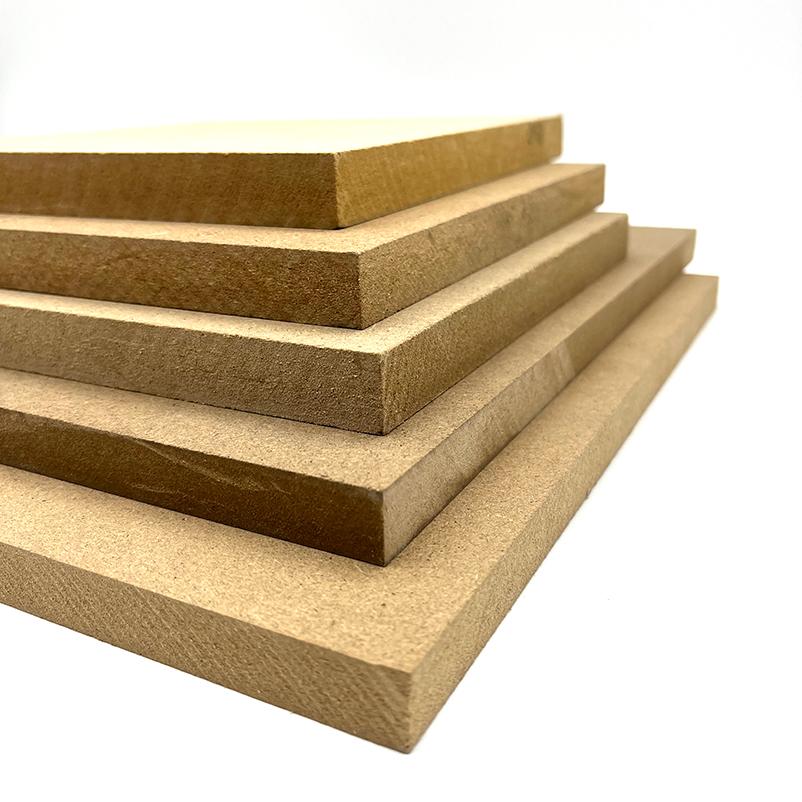
In 2026, China's MDF industry undergoes in-depth structural adjustments. Tightened environmental policies, trade barriers and demand upgrades have shifted it from scale expansion to greenization, high-endization and diversification, with capacity optimization and export restructuring as core priorities.
Environmental compliance is an industry "hard threshold". China fully implements the GB/T 39600-2021 formaldehyde standard, with E0/ENF grade products as mainstream. By early 2026, only 37.6% of production lines meet it stably, leaving many SMEs facing renovation or elimination. Stricter carbon controls also force energy-saving upgrades, with some gaining carbon quota income.
The export pattern is restructuring rapidly. In Jan 2026, Vietnam imposed a 2.59%-39.88% anti-dumping duty on Chinese MDF for five years [4]. As China’s top MDF export market, this raises costs, pressuring dependent SMEs to face order losses [4]. Exports also diversify to the US, Costa Rica, etc., with 118 Jan shipments maintaining resilience [1].
Demand and technology drive product iteration. Furniture manufacturing remains the main application but slows; interior decoration (backed by prefabricated buildings and old house renovation) is the core growth driver. High-end formaldehyde-free, flame-retardant MDF grows; EPD-certified products have a 22% premium, favored by Europe and America [2]. Continuous press technology accounts for 65% of capacity, with AI production, formaldehyde-free adhesives and non-wood raw materials reducing costs.
Experts note 2026 is key for MDF’s high-quality development. Environmental cost internalization and export restructuring will intensify industry reshuffling. Leading enterprises will expand share via compliance, R&D and diversification; SMEs need to accelerate renovation and expand emerging markets.
MDF Factories Suspend Production Ahead of 2026 Spring Festival
2026 PET MDF Board Industry News
